
The "New Housing Crisis" Headline Is Real — Just Not For The Reason They're Saying
If you woke up this week and saw Lawrence Yun calling the housing market a “new housing crisis,” you weren’t wrong to pay attention. January existing home sales dropped 8.4% from December — the biggest monthly decline since February 2022, the slowest pace since the end of 2023. CNBC ran it, the wire services picked it up, and by the time most agents hit their phones Monday morning, clients were texting them asking what’s going on.
Here’s the honest read on that number — and why the more important story got buried underneath it.
What everyone’s saying
The narrative is straightforward: sales crashed in January, the market is in crisis, buyers aren’t buying, and things are getting worse. Some version of this is going to show up in every market report, every brokerage newsletter, and every client conversation this week. And there’s enough truth in it to make it land.
What makes this framing land so hard is that 3.91 million annualized sales is genuinely low. It’s not a rounding error. It’s not seasonal noise. The market is soft, particularly at the entry and mid-range price points. First-time buyers are effectively locked out of a market where median prices are at record January highs. Americans stuck is how Yun described it, and he’s not wrong about the feeling.
But the framing of “new crisis” implies something changed this week. It didn’t.
What the data actually shows
January closings reflect contracts signed in November and December. That means what we’re measuring is buyer behavior from a period when mortgage rates were elevated, consumer confidence was already falling, and the market was in its natural seasonal slowdown. This isn’t a new shock to the system. It’s a backward-looking measurement of a market that was already navigating real headwinds.
Here’s what actually is new this week.
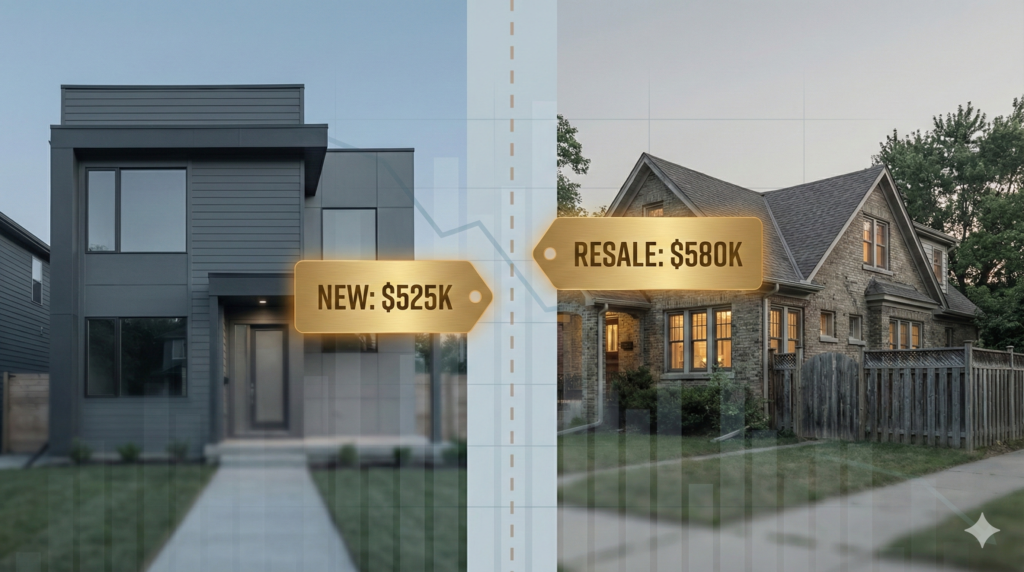
For the first time in decades, the median price for a new home is lower than the median price for a resale home. Builder discounts are running at nearly 20% of new inventory — one in five new homes is being actively discounted. Builders like Lennar have cut average sales prices by 10% year over year. Rate buydowns are being offered at scale. The builders are doing everything they can to move product, and it’s creating a window of genuine buyer advantage in new construction markets.
At the same time, the tariff escalation that took effect January 1, 2026 is now live. New tariff rates on kitchen cabinets hit 30%, vanities at 50%. The NAHB estimates approximately $10,900 in added construction cost per new home from the current tariff stack. That’s not a projector risk — it’s a cost that’s working its way through supply chains right now.
So what you actually have is a short window where builders are pricing competitively, absorbing costs through margin compression, before those tariff-driven increases either kill the discounts or get passed to buyers. That’s the real signal in the new-build/resale price inversion. It’s likely temporary.
And then there’s the consumer confidence piece. More than half of people who intend to buy or sell a home this year expect a recession. Ninety-three percent say they anticipate financial challenges ahead. Only 40% think the economy is heading in the right direction. But 86% still say this is a good time to transact. Buyers are not absent from this market because they don’t want to buy. They’re hesitant because the economy feels uncertain and they don’t have enough clarity to act.
What this means for positioning
The agents who are going to move deals in this environment are not the ones with the best pitch. They’re the ones who can translate what’s happening into something a scared buyer can act on.
The crisis framing in the media is actually working against deal flow, not for it. It’s giving hesitant buyers permission to stay on the sidelines. Agents who can show up with the data — days on market, new build pricing, seller concession rates, actual inventory levels — and turn those numbers into a coherent picture are providing something that no amount of rate movement can replace.
For sellers, the takeaway is also clear. Days on market hit 64 days this week, the longest stretch in six years. Homes priced to last year’s market are sitting. Agents who go into listing conversations armed with that reality, and who can help sellers price correctly from day one rather than chase the market down through reductions, are the ones who will maintain listing inventory while everyone else loses it.
The bottom line isn’t that there’s no crisis. Some buyers are genuinely locked out. Entry-level buyers in particular are facing a market that doesn’t have answers for them right now. But “stuck” is different from “broken.” And agents who understand that distinction will operate very differently than the ones reading headlines.